Contact

mail@gemini-theme.com
+ 001 0231 123 32

Follow

Info

All demo content is for sample purposes only, intended to represent a live site. Please use the RocketLauncher to install an equivalent of the demo, all images will be replaced with sample images.

 

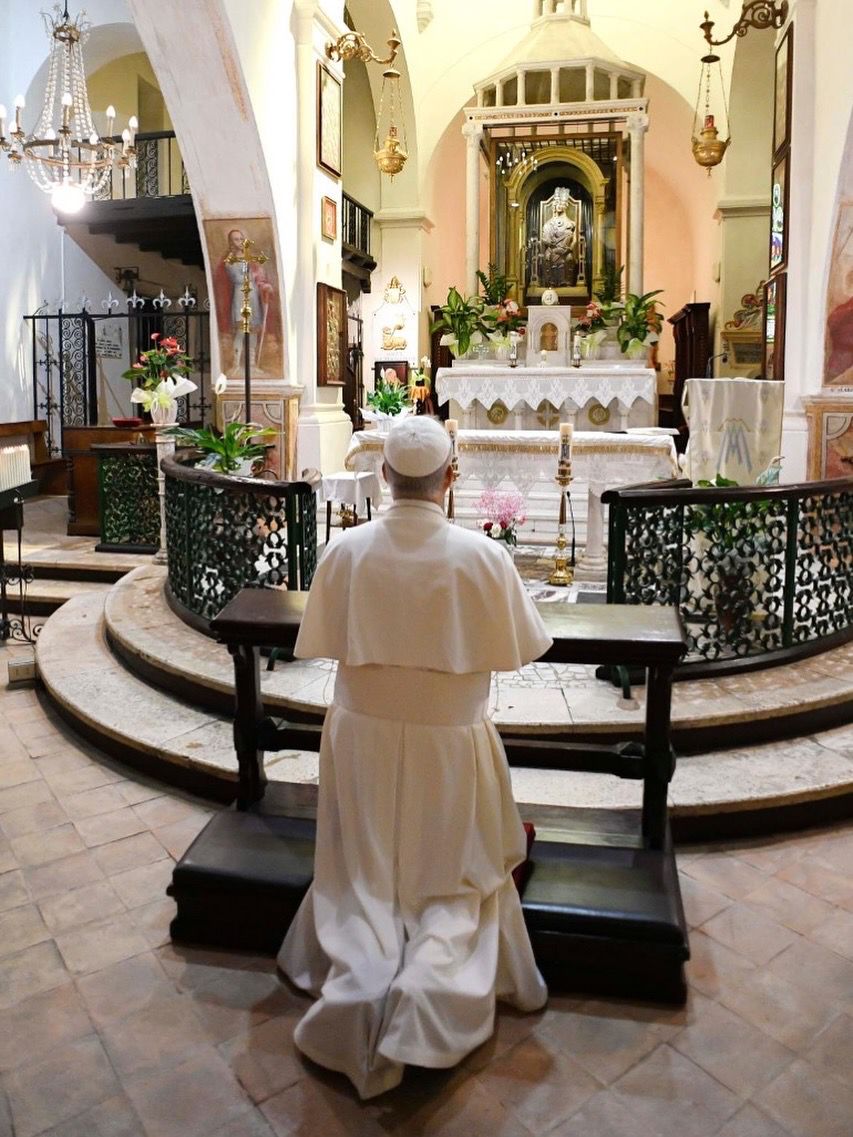
On August 19, 2025 resurrectionists who staff the shrine of Mentorella dedicated to Our Lady of Grace welcomed Pope Leo XIV. The occasion marked the third time in recent decades that a sitting pontiff visited the shrine for prayer and reflection.  Both Pope John Paul II and Pope Benedict XVI made repeated pilgrimages to the shrine of Our Lady of Mentorella. Indeed, upon request, pilgrims who visit the shrine today can glimpse the simple, austere guest rooms frequented by these former holy fathers.

The shrine of Mentorella was first entrusted to the Congregation of the Resurrection in the mid-19th century by then Pope Pius IX. Since that time Resurrectionists have continuously staffed and maintained the shrine for pilgrims.

For additional coverage of the Pope's visit this link.

For more on the shrine of Our Lady of Mentorella visit here (for English) or here (for Italian).

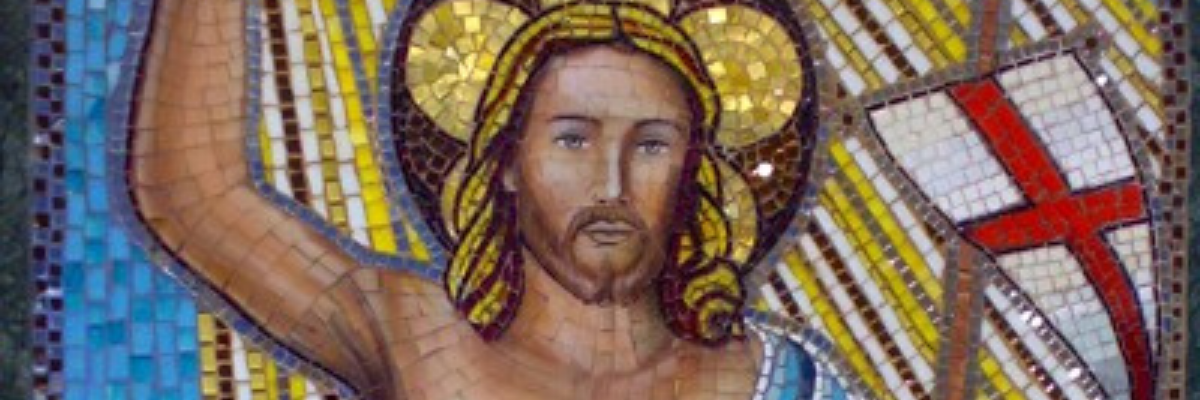
Meet Fr Lucjan Bartkowiak, C.R.  Fr Lucjan professed his first vows in the Congregation of the Resurrection in 1994. He was ordained to the priesthood in 2000.  Early on in his priesthood, Fr. Lucjan began working in Bulgaria. While there he not only worked in the parish but also further developed his gift of writing (painting) icons.  On leaving Bulgaria , Fr Lucjan moved to Rome where he study iconography. During this time he also became interested in mosaics.  Fr Lucjan has now become a true artist in iconography and mosaics.  He has worked on and created numerous mosaics in several different places.  Below are pictures of his most recent project, the chapel of St. Elizabeth hospital. (In the group picture, Fr Lucjan is center next to the bishop.)


Pictures from the 27th annual CR Gala, held on Sept. 29th at Allegra Banquets at Rosemont, IL. 


ks. Kazimierz Pieniążek CR.


Father Kazimierz Pieniążek CR was born on March 4, 1907, in Chęciny, Garwolin County, the son of Michał (d. 1948) and Marianna (née Rogala, d. 1975). His parents owned a medium-sized farm and a windmill. He was the eldest child and had seven siblings—three brothers and four sisters. He was baptized on March 10, 1907, at St. John the Baptist Church in Górzno (Garwolin Deanery) and was confirmed in Garwolin. He studied in Chęciny, Garwolin (where he first encountered the Resurrectionists), and Lwów. He joined the congregation on September 21, 1925, and made his first vows on March 8, 1927, in Kraków (before Father Julian Kowalski CR). He studied philosophy and theology at the John Casimir University in Lwów (1927-1933, with a break from 1929-1931 to complete his secondary education). He made his perpetual vows on March 8, 1930. He served as the senior in the boys' boarding school (1930-1931). He received minor orders (acolyte and exorcist) on December 20, 1930, and graduated from Żółkiewski Gymnasium in Lwów on May 21, 1931. He was vice-prefect of the seminary (January 1932-1933) and was noted for his talents in declamation and art. He was ordained a priest on June 10, 1933, at the seminary church in Lwów by Bishop Franciszek Lisowski. He studied canon law at John Casimir University in Lwów (1933-1934) and earned his degree in moral theology on June 16, 1934. He served as vice-rector of the religious seminary and novice master in Rome (1934-1937), where he also studied canon law and obtained a licentiate in theology. He earned a doctorate in canon law with a dissertation titled “De patrimonio Ecclesiae in Polonia iuxta concordatum ex Anno 1925” (Rome 1937). He made a pilgrimage to the Holy Land.

From 1937, he was in Warsaw, serving as bursar (1937-1938), superior of the house (1938-1940), and rector of St. Casimir's Church. He worked pastorally with the parish choir, youth, scouts, morally endangered individuals, the elderly, and the sick. Under his direction, damage to the church caused during the defense of Warsaw in September 1939 was repaired, and he prepared financial and material resources to complete the church’s construction. He was known as a serious (despite his young age), disciplined, and hardworking priest. He was arrested on January 17, 1940, and imprisoned at Rakowiecka Street in Warsaw. The reasons for his arrest and the search of the entire monastery may have been related to his sermons (especially the one on November 11, 1939) and reports to the Gestapo, as well as his refusal to release funds collected for the church’s expansion. Subjected to brutal interrogation, he was held at Rakowiecka Street and Pawiak Prison, where he continued his pastoral ministry to fellow prisoners and maintained secret contact with his community. He was transported around March 25, 1940, to the Modlin Fortress, likely to the KL Pomiechówek Fort III or Fort I, where the Germans had established a transit camp. From there, he was taken to the execution site in the outskirts of Warsaw in Palmiry and was shot on April 2, 1940. He was buried in Palmiry in grave XXIV. His remains were exhumed in 1945 and moved to the identified graves section at the Palmiry cemetery. His remains were identified by Father Feliks Szmit, his classmate, thanks to his clerical garb and religious cord. Memorial plaques in his honor are located in the churches of St. John the Baptist in Górzno (2017) and St. Casimir in Warsaw.


    kl. Ignacy Sztukowski CR.

Cleric Ignacy Sztukowski CR was born on August 7, 1914, in Chotów Nowy near Ostrów Wielkopolski (Poznań Archdiocese), the son of Franciszek and Julianna (née Mikołajczyk). He was baptized on August 9, 1914, in Gostyczyn and confirmed on March 22, 1930. He attended primary school in Chotów, the male high school named after A. Asnyk in Kalisz (1926-1933), and completed his secondary education at the H. Sienkiewicz Gymnasium in Lwów (1935-1936). He joined the congregation on August 12, 1933, and made his first vows on February 15, 1935, in Kraków (before Father Henryk Nowakowski CR). He studied philosophy and theology at John Casimir University in Lwów (1936-1939) and made his perpetual vows on February 15, 1938, in Lwów (before Father Franciszek Torbus CR, the superior of the house and rector). He was tall, had a great sense of humor, and was known for his diligence in studies.

After the outbreak of the war, he briefly found himself in Kraków before moving back to Chotów. He was arrested by the Nazis in Małe Graby near Ostrów Wielkopolski and was initially imprisoned in the Sachsenhausen concentration camp. From September 17, 1940, he was held in Dachau (prisoner number 19866), where he was murdered on December 27, 1940. A memorial plaque in his honor is located in Chotów.


  ks. Jan Gracz CR.  

Fr. John Gracz CR   Born on October 20, 1905, in Radawnica near Złotów, son of Stefan and Marta (née Ciza). He was baptized on October 22, 1905, and confirmed on June 23, 1918, at St. Barbara's Church in Radawnica (Złotów deanery, Gniezno-Poznań metropolitan area). He studied in schools in Radawnica, Złotów, and Bydgoszcz. He entered the Congregation on March 4, 1927, and took his first vows on October 28, 1928, in Kraków (before Father Stanisław Skwierawski CR, the Master of Novices). He continued his education at a high school in Lwów (1928-1929), studied philosophy and theology at the University of Jan Kazimierz in Lwów (1928-1933). At the end of November 1930, he participated in the funeral of his brother. He received minor orders on December 20, 1930, and February 2, 1932. He took perpetual vows on October 28, 1931, in Lwów (before Father Wojciech Cyrwus CR, the Superior of the house) and was ordained a priest on June 10, 1933, at the seminary church in Lwów (by Bishop Franciszek Lisowski). He was a Master of Pedagogy and served as a pastor at St. Boniface's Parish in Warsaw (1933-1934), then as a parish priest in Poznań at Krzyżowniki (1934-1935). He was a rector at the boarding school in Lwów (1935-1937) and then returned as a parish priest in Poznań at Krzyżowniki (1937-1941). Arrested by the Nazis at the rectory on October 6, 1941, he was imprisoned in the KL Posen concentration camp (Fort VII) and, on October 30, 1941, transferred to the KL Dachau concentration camp, where he was assigned the number 28063. He was murdered on August 13, 1942, in Dachau.


We welcome you to watch our celebrations video:

See the pictures from Our All Souls Day Mass!

Every six years, we as a community hold what is known as a General Chapter.  The leaders of the community world-wide as well as elected delegates from across the entire community come together in Rome to evaluate our common life and to plan for the future.  Additionally, we have elections for our General Curia, our Superior General, our Vicar General and two councilors.  The General Chapter took place from June 20 to July 6.  In addition to all the meetings, we were able to visit the home in which our founder lived in the early days of the community as well as the church of his burial.  One of the highlights was our meeting with Pope Francis on June 28 after the regular Wednesday General Audience.  Below you will find a link to a video with highlights from the General Chapter.
 

View the List by Clicking Here

Click Here to View our Pastoral Letter